
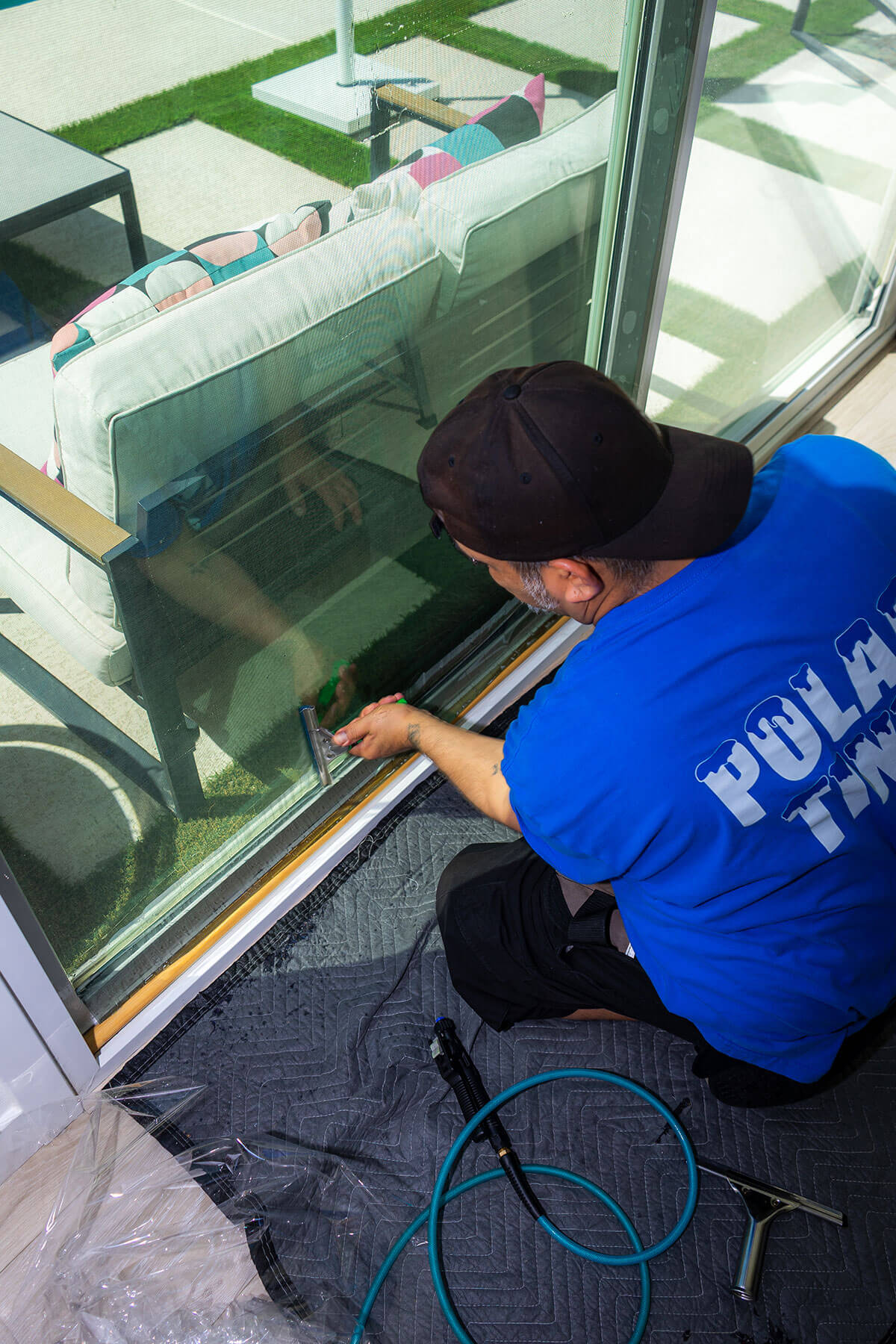
Polar Tint Henderson handles a steady stream of residential installs on the Lake Las Vegas waterfront. The combination of direct desert sun and lake-reflected solar energy creates one of the hardest heat-load profiles in the Las Vegas valley. This case study walks through one install: a single west-facing great-room wall on a waterfront home, before and after.
Quick Answer
- Lake Las Vegas west-facing walls take double heat load: direct sun plus lake reflection.
- Before film: interior wall temperature at 4 PM in July measured 96 degrees Fahrenheit on instrumented thermometer.
- After Plus Nano Ceramic film: same wall, same time of day, measured 80 degrees Fahrenheit - a 16-degree drop.
- Furniture fade pattern visibly stopped progressing. UV rejection is 99% on every Polar Tint Nano Ceramic grade.
- HOA-compliant - neutral exterior appearance, no metallic outer face.
The home and the heat problem
Single-story contemporary in Lake Las Vegas, west-facing great room with floor-to-ceiling glass overlooking the water. The homeowner reported three issues: cooling bills running far higher than comparable square footage elsewhere in Henderson, glare on the kitchen island that made afternoon meals uncomfortable, and visible UV fade pattern starting to show on a hardwood floor and an area rug after roughly two years.
Walking the home, two factors stood out. First, the west exposure - this wall takes the full afternoon sun from roughly 2 PM until sunset. Second, the lake. Water reflects roughly 7 percent of incident solar radiation back at the shoreline. For a home directly on the water, that means part of the heat load is sun coming up off the lake at the windows.
The measurements - before film
Polar Tint Henderson placed an instrumented surface thermometer on the inside wall about six inches from the glass, on a clear July afternoon with an outdoor temperature of 109 degrees Fahrenheit. Readings:
| Time | Outdoor temp | Inside wall temp (untinted) | Notes |
|---|---|---|---|
| 1:00 PM | 106 F | 87 F | Sun starting to clear the south arc |
| 2:30 PM | 108 F | 91 F | Direct exposure plus lake reflection ramping |
| 4:00 PM | 109 F | 96 F | Peak load |
| 5:30 PM | 108 F | 94 F | Sun starting to angle off the glass |
The HVAC system was running essentially nonstop from 2 PM through 7 PM trying to hold a 76-degree set point. The west wall was the limiting factor.
The install
Polar Tint Henderson installed Plus Nano Ceramic residential film on the entire west-wall glass run. Total install time: one day. The film is a neutral-tone, non-reflective Nano Ceramic - HOA-compliant for Lake Las Vegas, with no metallic outer face. Visible-light transmission stays high enough that the view across the water is essentially unchanged when standing inside the room.
Film specs:
- 80% IR rejection (Plus grade)
- 99% UV rejection
- Neutral exterior tone - no reflective or mirrored look
- Manufacturer-backed lifetime residential warranty
- Lifetime Polar Tint Promise: no bubbling, no peeling, no fading, no color shift
The measurements - after film
Returned the following week, same clear afternoon, outdoor temperature 110 degrees Fahrenheit. Same thermometer, same wall position:
| Time | Outdoor temp | Inside wall temp (film installed) | Delta vs before |
|---|---|---|---|
| 1:00 PM | 107 F | 78 F | 9 F lower |
| 2:30 PM | 109 F | 79 F | 12 F lower |
| 4:00 PM | 110 F | 80 F | 16 F lower |
| 5:30 PM | 109 F | 80 F | 14 F lower |
The HVAC stopped struggling. The thermostat held set-point through the afternoon without continuous run-time. The homeowner also reported the glare on the kitchen island was substantially reduced - the film does not block visible light entirely, but it cuts the harsh reflection-and-glare component.
Fade prevention - the slower payoff
The temperature drop is immediate. The fade prevention is a longer story. UV exposure is the primary driver of fade on hardwood floors, area rugs, leather upholstery, and artwork. With 99% UV rejection from the day the film is installed, the fade pattern stops progressing.
Three months in on this Lake Las Vegas home, the homeowner sent a photo of the hardwood floor where the fade line had been visible. The line had not advanced - the existing fade is permanent, but no new fade is occurring beyond what was already there.
Why this matters for any Lake Las Vegas home
Every Lake Las Vegas waterfront home has west-facing or south-facing glass to capture the lake view. That same glass is what creates the heat-load problem. Polar Tint Henderson regularly films Lake Las Vegas homes - typically the great-room and primary-suite glass runs that face the water. A few patterns from those installs:
- Two-story homes: the upstairs primary suite often runs hotter than the downstairs great room because warm air rises and the upstairs gets less HVAC throughput. Film the upstairs windows first.
- Floor-to-ceiling glass: factor in the radiant floor near the glass - that surface heat lingers into the evening. Plus or Ultimate Plus film cuts the radiant component substantially.
- HOA submittals: Polar Tint Henderson provides product specification sheets for the Lake Las Vegas HOAs that require them. Neutral-tone Nano Ceramic typically passes review without issue.
The Lifetime Polar Tint Promise
Residential installs carry the Lifetime Polar Tint Promise: no bubbling, no peeling, no fading, no color shift. Match Guarantee applies - find a verifiable lower price on the same 3M-backed Nano Ceramic residential spec and we match it. We are local. The team that installed the film is the team you call if there is ever a question.
Locally quoted by your home and your west-facing glass count. Call (702) 665-6009 or request a quote. See also our residential window film page, Lake Las Vegas residential service, and the Polar Tint Henderson FAQ.
Frequently asked questions
Why does Lake Las Vegas need residential window film?
Lake Las Vegas waterfront homes face two heat loads at once - direct desert sun plus reflected solar energy off the lake surface. West-facing walls take the hardest hit in summer afternoons. Nano Ceramic residential film rejects 80 to 98 percent of IR and 99 percent of UV without darkening the lake view.
Will window film darken my Lake Las Vegas view?
It does not have to. Polar Tint Henderson installs neutral-tone Nano Ceramic residential films that maintain near-original visible-light transmission. The view stays clear; the heat and UV come down.
Does residential window film stop furniture fade?
Yes - it is the most documented benefit of residential film. With 99% UV rejection on every Polar Tint Nano Ceramic grade, fade on hardwood floors, rugs, leather furniture, and art slows dramatically. UV is the primary driver of fade.
How much can residential film lower interior temperatures?
In Henderson and Lake Las Vegas measurements, Polar Tint Henderson has seen surface temperatures inside west-facing rooms drop 10 to 18 degrees Fahrenheit on summer afternoons after installing Plus or Ultimate Plus Nano Ceramic film. Ambient room temperature follows.
Will my HOA allow window film in Lake Las Vegas?
Most Lake Las Vegas HOAs allow film that maintains a neutral exterior appearance. Polar Tint Henderson installs HOA-compliant films with no reflective metallic outer face. We can provide product specifications for HOA submittals on request.
How long does residential film last in Mojave conditions?
Polar Tint Nano Ceramic residential film carries a manufacturer-backed lifetime warranty for residential use. In Mojave conditions we expect the film to perform for the life of the glass, with the Lifetime Polar Tint Promise covering bubbling, peeling, fading, and color shift.
More from Polar Tint Henderson: all posts · about this location · FAQs · residential window film